Wednesday, August 13, 2014

Just Some Thoughts on Dealing with a Mental Illness

These are just some of my thoughts on mental illness. Some people might completely disagree with what I have to say, but so be it. Not everyone is going to like my writing or my views. I’ve come to embrace that fact. I can’t make everyone happy and nor should you.

I’ve had more down days than I’ve had up days lately. It’s been a constant struggle of mine. Some days I can easily overcome it, blow it right off my skin. And other days it latches onto me like the black plaque. Sometimes I can’t shake it off. It fucking sucks to be honest. Here I am, trying so hard to manage it, whatever the hell this blackness is—whether it’s financial woes or I’m worried about my kids, to self loathing. I hate hating on myself, but I do it. It comes in like a routine procedure. I’m like, okay, brace yourself Mama, I say in my mind. Let’s just get through it, your better moment will come.

Sometimes I reach so hard for that better moment in my life, that I don’t realize my moment is pretty good right now. Once I realize how thankful I am, it passes for a while. And I feel good, sometimes great. But it’s absolutely impossible to always be holding on to the good in your life.

I, for some reason, like many others, suffer from a mental illness. It’s a chemical imbalance. It could be genetic. The traumas in life that you go through, it could be a whole cocktail of things. It’s hard to drink down. Sometimes our bodies and minds just won’t allow it. Not everyone can deal with traumatic things that happen to them. Some people are stronger than others. Some can endure the pain of whatever life brings. Some can’t—yet still cope. Holding on to whatever is going to keep them floating above the surface. Because sometimes deep down the darkness is so blinding to the point of no closure.

How do you close a door deep within you that constantly tries to suck you in, like a vacuum effect?  What if you close a lot of doors in your mind, just to block the pain out? Then you’d be trapping yourself in right? It’s a catch 22. You’re damned if you do and you’re damned if you don’t. Then the mind games of what if? And why this? And what should I do? What should I not do? What the fuck am I doing wrong?

Well, over thinking for one. GOD, I truly, TRULY hate it when someone says, “Well, don’t think so much.” Like it’s that easy to turn it off like a light switch. How do you stop yourself from thinking too much when all anyone ever does is think? Sure there are moments of relief and black periods in my mind when I sleep. But the nightmares always come in my lightest of sleeps. I continue to have those dreams where I’ve had to literally pull myself out of it.  Have you ever tried to pull yourself out of your dreams before? It’s one of the worst feelings in the world of losing your breath, being forced out of your dream to be shoved back into reality. Like holding your breath under water for as long as you can bear, then gasping for air when you wake up.  THEN, here’s my problem, I can’t seem to shake the dream off my mind. Like it’s making me feel miserable for even thinking that.

My point here is there is none. Mental illness sucks the big f**kin balls. I’m dealing with it like an illness—because it is in fact an illness. I’m managing to get by, writing, staying up with my meds and just getting by. My precious moments are with my kids and my family. If I didn’t have them, I’d be gone or in a mental institution by now. I am a dependent on them. I only thrive through them. So support is crucial to people with mental illness. Sometimes all the support in the world doesn’t help either. Everyone’s case of mental illness is different and should never be compared from one person to another. I just wish there was more empathy in the world to it. Mental illness gets a bad rap all the time. Mainly why there’s a stigma. And I think it’s even more difficult to endure a mental illness when there’s the internet, and texting and tweeting and beeping and whatever the fuck is going on. Honestly some things in life you don’t really need to know. You’re better off turning a deaf ear to it or a blind eye to it, because not everything needs be known.

If there’s anything you should turn off, it’s technology. Just for a little while. Or make it a long while. Just to recoup and center yourself again. Never in any way think that’s a selfish thing to do. Sometimes being alone and wrapped in your own thoughts is a good thing. And be proud of the fact that you're still here.  

Saturday, August 2, 2014

Updated List of (2014) YA Publishers

All the existing lists on my blog are still current. The only one that I had to remove was Strange Chemistry that closed their doors recently. Some of these publishers pay advances. I will mark them (Adv) Some are brand new: (N) please proceed with caution. Some are outside the US. (I will mark those accordingly.)  Some I know for a fact are reputable. Those will be marked with an (R.)

The Novel Fox: Adv, N
Bloomsbury Spark: Adv, N, R
Switch Press (Capstone Imprint): Adv, N, R 
Dancing Cat Books:  N, R, (Ca)


Again, proceed with caution on any new publisher. Make sure you find out all you can before you sign with any publisher (new and existing.) But be especially careful with brand new ones. If you find out these are vanity publishers, please contact me and I will remove them. If you have any new ones that you’d like to share, I’d love to hear from you.


Hope this is helpful.

Monday, July 21, 2014

Tips on Writing a YA Mystery Novel

Every writer is different, so I’m only speaking from my own experience as a YA mystery writer. 

Thinking about the protagonist first might be a better idea, then thinking about the plot. I see mysteries being more character-driven than anything. Now, some people may disagree, but if you have a character that is driven to find out what happened, chances are you have a strong active character. In a mystery the main character has to be that amateur sleuth, actively searching out answers to the crime. The story should unravel at a suspenseful pace, not too slow and not too fast. You’ll need to find the right tempo for your novel. Don’t rush it either, then you might fizzle out before the story even really starts to begin.

So first what I do is focus on the main lead. Who’s going to take me on this journey of investigation. Clues and hints and foreshadowing, and of course cliffhangers too, are all great components of having a mystery novel.  Everything should connect when the reveal time comes so it isn’t a total surprise that nothing quite fits.  Having twists and turns are great, but those twists and turns will need to lead to a solid conclusion. Unless you’re writing a series and you’d like to keep it open.  There are of course open-ended standalone novels, which you can also do.  It’s whatever the story yearns for. Go with your gut every time. If you listen to everyone’s advice, your story will get too off track from the original core idea. Sometimes too many ideas is just not a good idea.

For a young adult novel, the protagonist should be between 13 to 18. You’ll see this differs from publisher to publisher, but it’s roughly around those ages.

You need a crime, someone goes missing, somebody winds up dead. The main character gets kidnapped.  Whatever endless crimes you can think of, pick whatever interests you most.

Planning and plotting.  Premeditate your novel. Have fun with it.  Think about it as much as you want and just indulge in the idea for a while, as if it were a movie your mind.  And when there’s a great idea that you have, write it down. That’s how it all starts, when you write it out.  Plotting only goes so far.  Sometimes writing it out and following along with the character, you can figure out the crime together. Outlines work, but not always. Sometimes writing an outline, you lose steam in writing the actual novel. So remember to leave room for more and always keep an open mind.

I don’t think you should truly know the ending of your book until it’s completely over. Try to think of all the scenarios that you can, questioning all aspects.  Again, make sure your character is active in the detective roll. Don’t just let it all happen and fall into their laps.  They need to play an active role in figuring out the crime themselves.

Red herrings. The suspects in a mystery play a major role in figuring out who done it. You shouldn’t have too many the reader will get lost in who everyone is. I usually like to keep it to around 3 to 5. Now that might sound like a lot, or not enough. Again, go with your gut. Read a lot of other YA mysteries and see how they set it up. And then put your own spin on it. Don’t follow a trend, be one.  Write for yourself, first and foremost. Don’t worry about the targeted audience or who else is going to read it. Be secretive about it, like you’re conspiring a plan of some kind. I highly recommend getting your first few chapters critiqued, just so you know if you’re going in the right direction.

When you’ve written a full length manuscript (usually between 40,000 and 90,000 words) you will need to revise.  And maybe revise several more times after that too. I highly recommend getting a beta to read your work. There’s writing forums such as Absolute Write to help you connect with someone to swap stories with.  It’s free and very rewarding, critiquing others and getting critiques on your own work too.  It will help you grow as a writer.


Hopefully some of this information will be helpful to you when writing your YA mystery novel. Above anything else, always remember to have fun with it! Happy writing everyone!

Friday, July 11, 2014

Paying it Forward


Many writers may know this already, but it’s worth repeating, repeatedly. Unless your choice is to self-publish, never pay to get published or pay for services to get published, or pay an agent to get published.  Money should always flow to the writer, not the opposite.  Writing is an investment.  And with that investment, it also means investing your time (not money) to research on finding the right place for your work. Research is the key component here.

If you pay a service to help you get an agent, that doesn’t guarantee getting an agent. Even if you get an agent, that STILL doesn’t guarantee you getting published.  Paying for a vanity publisher will be an even bigger mistake. I know of no vanity publisher that was super successful with their books. Unless someone can prove me wrong.  I surely don’t know every publisher out there.  But I do know nine times out of ten, it’s a scam.

If you’ve devoted your time and energy in your work, why not devote your time and energy to getting the right publisher? Places like AbsoluteWrite, Preditors andEditors, Publisher’s Marketplace, Agent Query and QueryTracker (.net) are all good places to start.  And it’s all free information gathered from firsthand experience and proof of reputable places.

It breaks my heart when I see someone struggling miserably to get out of a contract, never getting paid, never seeing their book go to print. All because they signed with a bad publisher.

Case in point: My first two books, “Dreaming a Reality” and “Demon Girl” still sell after three years of being out there and I get very little to no money on my royalty statements. (and I’m talking 5 bucks and under here. And that’s every three months!)  The only thing they were good for was to have writing credentials.  Because that is, and will always be my work.  That they can never take away from me.  But I learned the hard way.  I’ve paid to get published years ago with a picture book and a year went by with nothing done. I pushed for it to happen and they sent me the cheesiest drawings, and poorest editing, I no longer felt good about the project. Instead I felt absolutely miserable. That was the last straw. I terminated that contract before it was ever published.


So, to get back.  Do your research extensively. Dig as deep as you need to go, but don’t pay for anything. You will regret it in the long run.

Wednesday, July 2, 2014

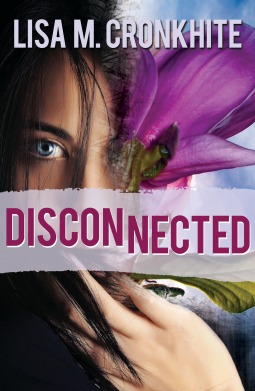
Giveaway Time: 3 Signed Copies of Disconnected!


Goodreads Book Giveaway

Disconnected by Lisa M. Cronkhite

Disconnected

by Lisa M. Cronkhite

Giveaway ends July 17, 2014.
See the giveaway details at Goodreads.
Enter to win

Monday, June 30, 2014

Publishers Weekly Review for DISCONNECTED

Drawing on her own struggles with mental illness, Cronkhite (Deep in the Meadows) crafts an unusual psychological thriller in which a young woman is terrorized and bullied by her own subconscious. "Amelia," as 17-year-old Milly Norris refers to her tormenter, taunts her with cryptic clues and comments regarding the parts of her past she can't remember. As Amelia belittles Milly, urging her to commit acts of self-destruction, Milly realizes that her family is as broken and dysfunctional as she is, and that her early childhood is wracked by tragedy. When Milly ends up in the hospital after cutting herself and losing consciousness, she finally receives the help she needs. However, further discoveries may destroy her attempts at internal peace. While Milly's conflicted relationship with her own mind is skillfully portrayed, the overall narrative is disjointed and unfocused; dramatic revelations come off as muted and distant. Even Milly's diagnosis carries little weight or impact, while another surprise regarding her family is bluntly revealed. Despite these shortcomings, Milly's story provides a strong look at how mental illness can manifest and affect lives. Ages 12–up. (June) -- Publishers Weekly 
Reviewed on: 06/23/2014
Release date: 06/01/2014